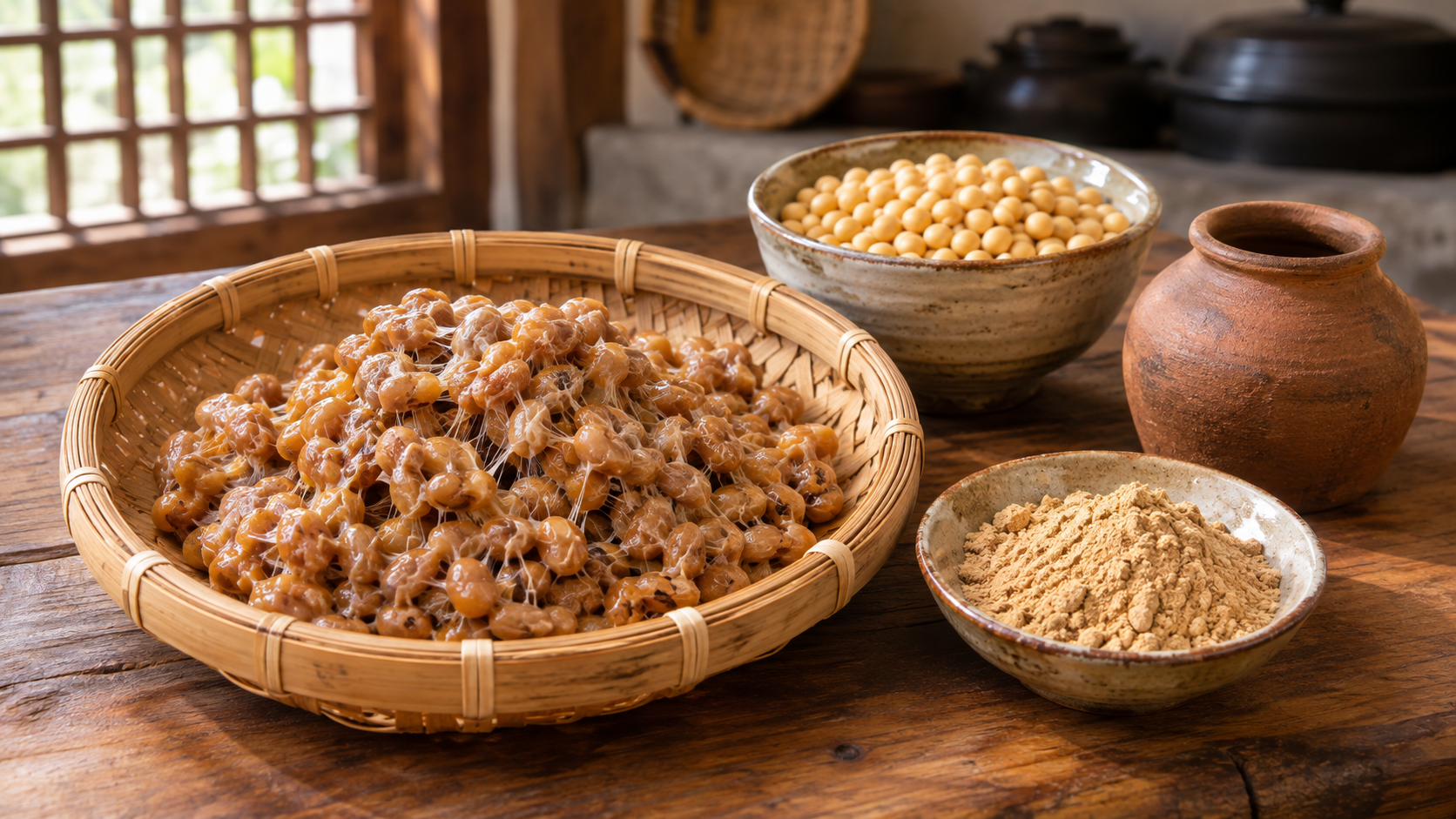
Making Korean cheonggukjang (fast-fermented soybean paste) at home: a 237.8–254.0% yield from dry soybeans, fermenting at about 40°C for 36–48 hours, the temperature with the least off-odor, drying it into powder, cooking the stew, and November 9, 2026 KAMIS soybean prices.
Cheonggukjang is Korea’s quick soybean ferment. Unlike doenjang it does not wait through winter: cooked soybeans kept warm for about two days grow sticky threads, and that is the product. Most failures come from temperature.
Bottom line: soak domestic white soybeans for 12+ hours, cook until soft, and ferment at around 40°C for a day and a half to two days. 1kg of dry beans gives about 2.4–2.5kg of fresh cheonggukjang. On November 9, 2026, Seoul wholesale (KAMIS) domestic white soybeans were KRW 227,000 per 40kg, about 5,680/kg.
Earlier records: Meju Soybean Price 2026. Daily prices: soybean.
1. Yield and cost
A 2021 paper by the National Institute of Crop Science measured fresh cheonggukjang at 237.8–254.0% of the raw bean weight, depending on variety. Soaked 12 hours at 20°C, beans weighed a little over 2.2 times their dry weight.
| Beans | Wholesale unit | Price (Nov 9, 2026, Seoul) | Per kg | Bean cost per kg of cheonggukjang |
|---|---|---|---|---|
| Domestic white | 40kg | KRW 227,000 | about 5,680 | about 2,300 |
| Imported white (medium) | 35kg | KRW 120,000 | about 3,430 | about 1,400 |
Domestic beans are almost unchanged from a year earlier (226,000). Other cities ranged from 210,000 (Busan) to 243,000 (Daegu).
2. Soak, cook, ferment
Soak in three times the water for about 12 hours, cook until a bean crushes easily between fingers, drain and cool to about 60°C. The Seoul Agricultural Technology Center’s class used a cardboard box over an electric heating pad with a few clean rice straws and a cotton cloth: 40–45°C for about 36 hours. Rice straw carries the Bacillus bacteria; a spoon of store-bought cheonggukjang or natto starter also works. It is done when a spoonful pulls long white threads.
3. Less smell
An RDA study (2006) compared 30, 35, 40 and 45°C and found the least off-odor at 40°C with a low inoculum; ammonia rose quickly with more bacteria. Keep near 40°C, stop as soon as threads form, and refrigerate right away.
4. Storage, powder and stew
Pound with garlic, ginger, chili flakes and salt to taste for stew, then freeze in single portions. For powder, dry fresh cheonggukjang (over half water) down to about 5% moisture and grind; one study preferred hot-air drying for aroma, another found freeze-drying best. The RDA webzine stew: 400ml water, cheonggukjang, tofu and seasoning, boil 5 minutes on high, finish with perilla oil off the heat.
5. For farmers
Selling homemade cheonggukjang needs a food business report or registration under the Food Sanitation Act: an on-site manufacturing-and-sales business (report) if you sell directly from where you make it, or a food manufacturing business (registration) for retail or online distribution. Ask the city or county sanitation office first.
References
- KAMIS, white soybean (domestic 40kg, imported 35kg) wholesale prices, November 9, 2026 (vs November 10, 2025)
- National Institute of Crop Science, Korean Journal of Food and Nutrition 34(4), 2021: yield 237.8–254.0%, 40°C 20h
- Kim et al. (RDA), Korean Journal of Food and Cookery Science 22(3), 2006: fermentation temperature and off-odor
- Seoul Media Hub, Seoul Agricultural Technology Center class (June 11, 2025)
- Encyclopedia of Korean Culture, “Cheonggukjang”
- RDA webzine (September 2023); Supreme Court 2023Do8730 (Dec 21, 2023); Food Sanitation Act Art. 37