How Korean local food direct markets (rokeolpudeu jikmaejang) work: who can supply them, the Iksan shipping rules as an example, commissions of about 10–15%, a reported NongHyup average of 11.3%, the direct trade law, and how consumers find a nearby market on Baroinfo.
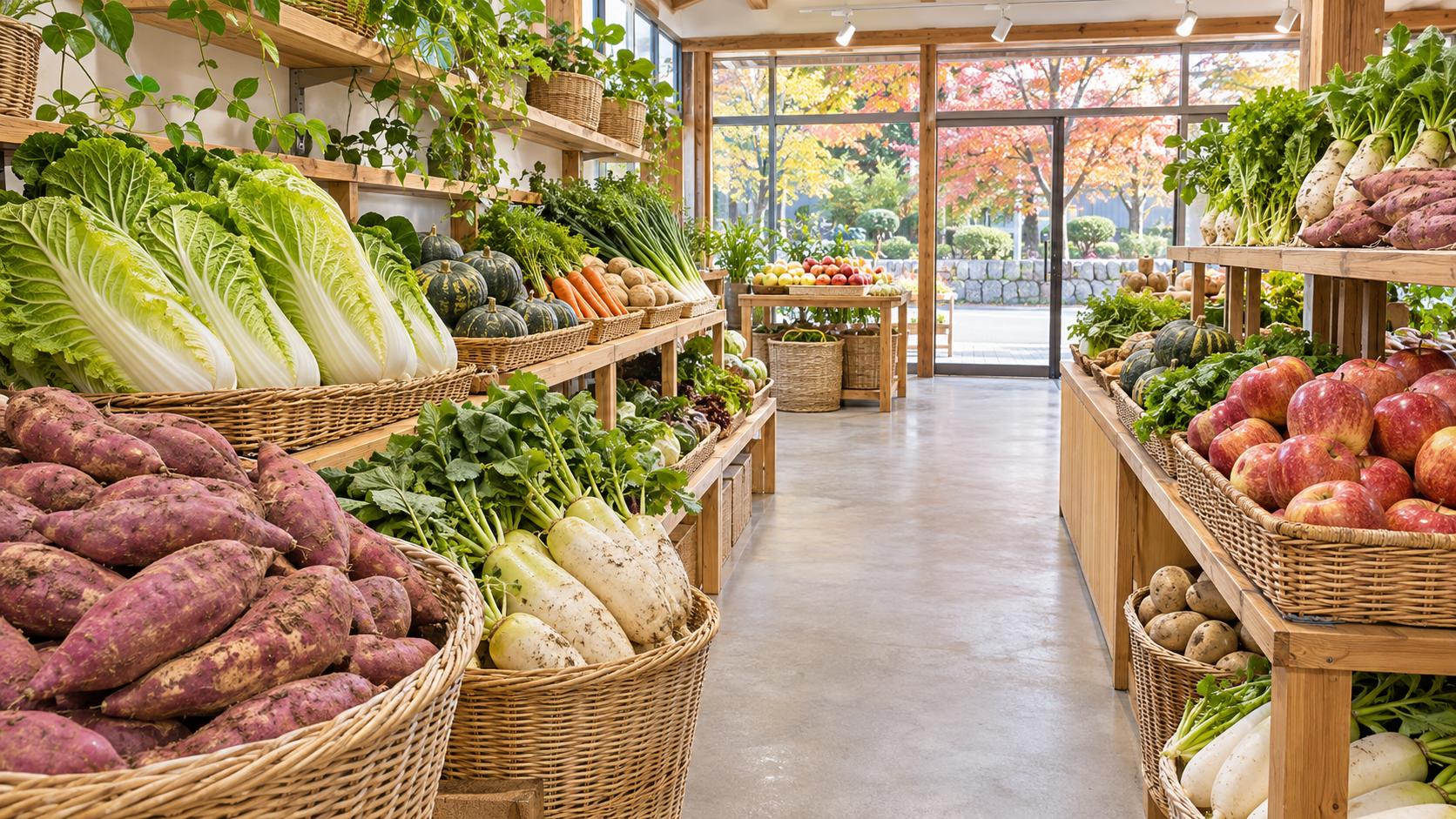
At a wholesale market, the auction sets the price of a farmer’s lettuce. At a Korean local food direct market, the farmer does. Growers pack in the morning, label each bag with their name, and collect what did not sell in the evening. That is why small and newly settled farms often start here.
Bottom line: most direct markets accept only registered farm businesses living or farming in that city or county. Farmers complete training and safety testing, set their own prices, and pay a commission on sales. Under Iksan’s public market rules the commission is 10% for produce and 15% for processed food; a 2024 news analysis of NongHyup data reported an 11.3% average for produce. Consumers can find nearby markets on Baroinfo, run by MAFRA and aT.
Earlier records: Local Food Packaging and Label Checklist, Farm Business Registration 2026.
1. What a direct market is
Korea’s direct trade promotion act defines direct trade as producer-to-consumer sales or sales through at most one intermediary, and local produce as goods grown or processed in a city or county and sold there. MAFRA’s open data lists 174 government-funded direct markets as of 2025 (not the total), and records Wanju’s Yongjin NongHyup market opening on April 27, 2012, widely cited as the first. A 2024 report counted 771 NongHyup-run markets.
2. Supplier conditions: the Iksan example
The Iksan Food Integrated Support Center’s shipping rules require suppliers to be Iksan residents or Iksan-based corporations, produce goods in Iksan, complete new-member and refresher training, pass a pre-shipment safety test seven days ahead, and label each item with producer, product, price and date. Producers set prices. Goods are sold within one day as a rule (48 hours for leafy greens, 24 for lettuce), and unsold items must be collected before the next opening. Yesan County recruits registered farm businesses actually farming locally, and Wanju certifies all produce and discloses producer names.
3. Commissions
Iksan charges 10% on produce and livestock products, 15% on processed food (plus VAT), 12% when using pickup routes, and 10% for farmers 65+ with under 0.2ha. Across NongHyup markets in 2023, produce commissions ranged 5–16.5% (average 11.3%), from 7.5% in Busan to 13.4% in Incheon. Example: 20 bags of lettuce at KRW 3,000 is KRW 60,000 in sales; a 10% fee leaves 54,000 before packaging and fuel.
4. For consumers
With no wholesale chain, produce often reaches the shelf the day it is picked, and producer labels let shoppers return to growers they like. Prices are set by each farmer, so they are not always cheaper than supermarket deals. Baroinfo (baroinfo.com) offers “find a nearby direct market” and farmers market maps.
References
- Act on the Promotion of Direct Trade of Agricultural Products, Articles 2 and 21
- MAFRA, local food direct market operating status (government-funded, 2025), Public Data Portal
- Iksan Food Integrated Support Center, Agricultural Product Shipping Rules
- Seoul Ilbo, NongHyup direct market count and commission report (July 24, 2024)
- RDA webzine, Wanju local food (April 2026)
- MAFRA and aT, Baroinfo