Native Korean honey has no official wholesale survey, so we compared online prices on November 19, 2026 for native-bee honey and beekeeping honey (2.4 kg), explained the difference between native and Western honeybees, why native honey costs more, label checks, the honey grading system and why crystallized honey is not fake.
Shopping for honey as a winter gift in Korea, you find 2.4 kg jars from about 34,000 won to 75,000 won, and anything labeled “native honey” (tojonggul) costs more still.
Bottom line: Native Korean honey has no official wholesale price survey. On November 19, 2026, Coupang listed Jirisan native-bee honey at 67,400 won and a tube type at 70,000 won, with no weight in the product name. Beekeeping honey in 2.4 kg jars ranged from 14,250 to 31,250 won per kg. Check the weight and the “honey” versus “sugar-fed honey” label first.
1. Native bees vs Western bees
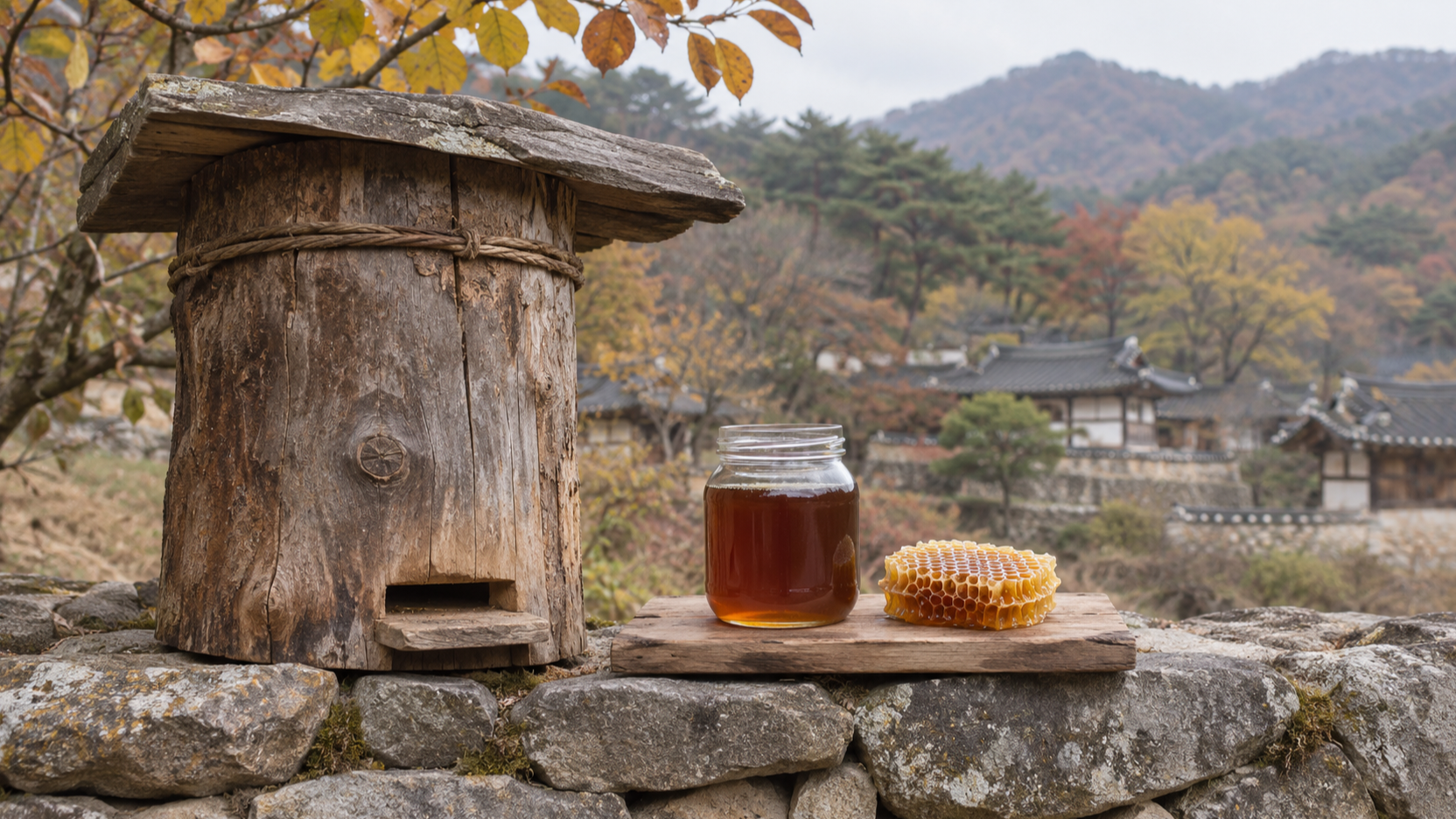
Native honey comes from the Asian honeybee kept in Korea (hanbong). Most honey sold is from Western honeybees, sorted by flower: acacia, chestnut and wildflower. Gyeonggi Province describes native honey as collected by native bees from domestic wildflowers, produced in small amounts.
2. Why it costs more
Native bees gather less honey, and colonies left unmanaged yield very little. Sacbrood virus disease wiped out more than 95% of native bee colonies nationwide, according to a 2012 Rural Development Administration release.
3. Beekeeping honey per kg (November 19)
| Product type | Size | Price | 1 kg |
|---|---|---|---|
| Mixed flower | 2.4 kg | 34,200 won | 14,250 won |
| Chestnut | 2.4 kg | 37,500 won | 15,625 won |
| Wildflower | 2.4 kg | 45,000 won | 18,750 won |
| Chestnut | 2.4 kg | 74,800 won | 31,167 won |
| Wildflower | 2.4 kg | 75,000 won | 31,250 won |
| Acacia | 2.4 kg | 75,000 won | 31,250 won |
| Acacia | 500 g | 14,800 won | 29,600 won |
4. Labels and grades
Korea’s Food Code lists honey from bees fed sugar as a separate type, “sugar-fed honey.” Moisture must be 20.0% or lower. Since December 27, 2023, domestic acacia, chestnut and mixed-flower honey can be graded 1+, 1 or 2 by the Korea Institute for Animal Products Quality Evaluation after a first check by beekeeping associations. Native honey is not covered.
Crystallized honey is not fake. The Ministry of Food and Drug Safety explains that the white crystals are glucose and are safe to eat. Sugar-fed honey crystallizes too.
5. For farmers
Native bees mean small yields, disease risk and the need for year-round flowers. If you sell native honey, state the weight, harvest period, region and whether bees were sugar-fed, and show the price per kg.
References
- Gyeonggi Province, native honey and the honey grading system (March 2026): gg.go.kr
- Rural Development Administration press release (October 3, 2012): korea.kr
- Ministry of Food and Drug Safety, honey standards: foodsafetykorea.go.kr
- Online prices: Coupang Partners product search, November 19, 2026.