Korean Rural Development Administration guidance on when to cut perilla for seed (32 days after flowering for early and mid varieties, 29 days for late), the field signs to watch, why to cut on cloudy mornings or evenings, plus 10-year price patterns and October 2026 KAMIS prices.
Miss the window and perilla seeds spill in the field; cut too early and many seeds are empty. The last week before harvest decides much of the year’s yield.
Bottom line: Korea’s Rural Development Administration (Nongsaro) puts the perilla seed harvest at about 32 days after flowering for early and mid-season varieties and 29 days for late ones, usually mid-September to mid-October. Cut when stems turn yellow and seeds start to drop, on a cloudy day in the morning or evening. On October 2, 2026, top-grade domestic perilla seed sold for KRW 374,000 per 23 kg in Seoul. Over 10 years, holding until the following March changed prices by only +1.8% on average.
1. When to cut.
Perilla flowers as days shorten: early varieties in early August, mid varieties in early September, late varieties in late September. Count from flowering. In the field, cut when stems and leaves yellow, pods start to brown and seeds fall when the stem is shaken.
2. Cut on cloudy mornings or evenings.
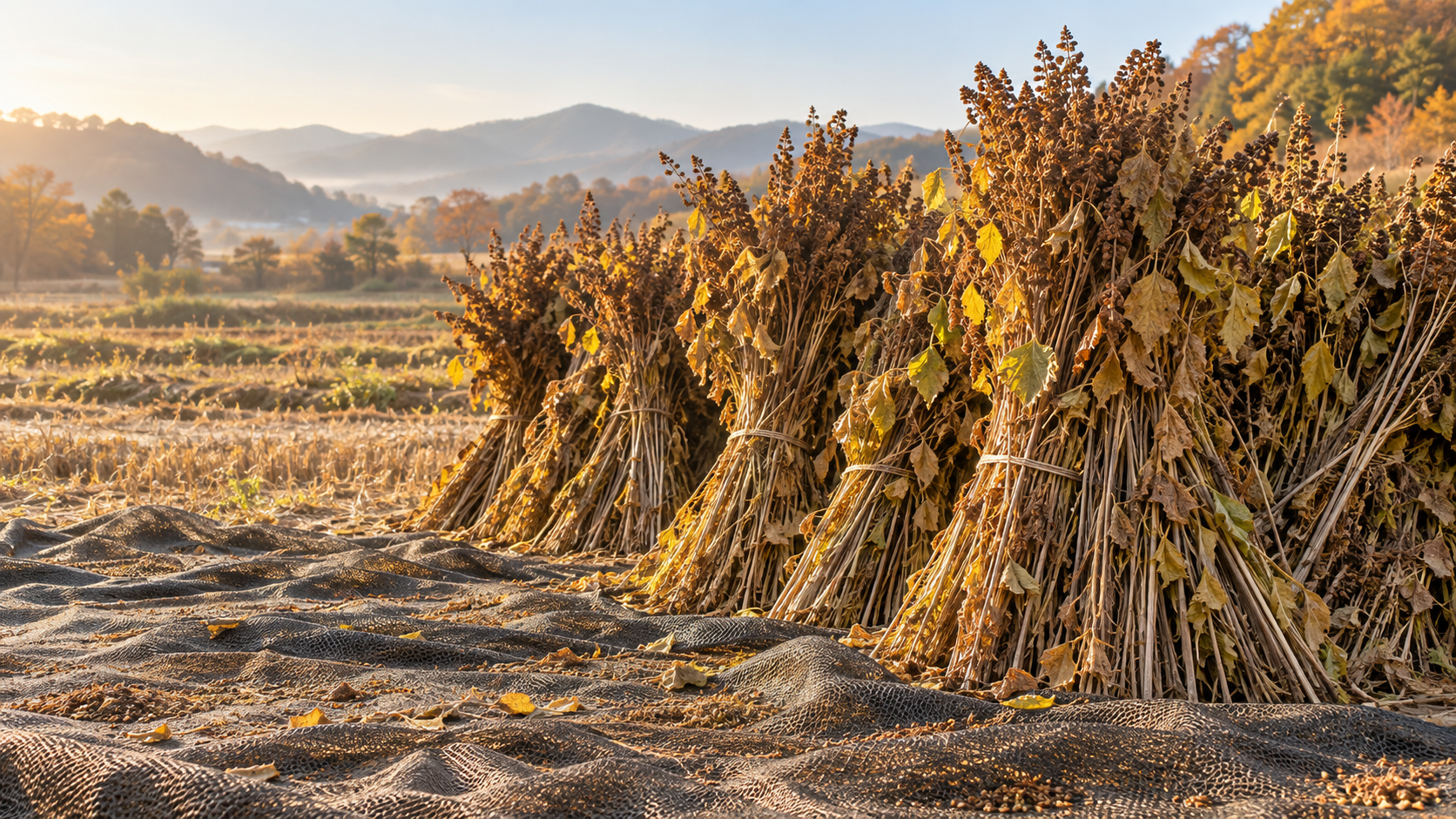
In strong midday sun pods dry and split, shedding seed as you cut and carry. Stand bundles upright to dry with a net underneath to catch falling seed, then thresh on the net once dry.
3. When to sell.
Domestic perilla prices barely move during the year: the cheapest month (January) and the dearest (December) differ by 9% on 10-year averages. Holding from October to the following March was higher in 4 of 9 years and lower in 5, averaging +1.8%. With weight loss and rancidity risk in storage, long holding rarely pays.
4. This year.
Seoul has held at KRW 374,000 since August, 10% above a year earlier and 45% above the 10-year October average. Daegu paid KRW 397,000 and Gwangju KRW 356,000. Imported perilla (medium grade, 45 kg) rose 28% year on year to KRW 290,000.
5. Conclusion.
Watch flowering dates and field signs, cut on cloudy mornings or evenings, and sell well-dried, cleaned seed before year-end rather than counting on spring gains.
Sources
- Rural Development Administration, Nongsaro perilla (seed) work schedule (harvest timing, field signs, cutting time, flowering by variety).
- aT KAMIS, period wholesale (intermediary) prices and monthly averages: domestic perilla seed top grade 23 kg, imported medium grade 45 kg, 2016–October 2, 2026 (Public Data Portal API).
- Actual harvest timing and prices vary by variety, sowing date, weather, market and terms of sale.