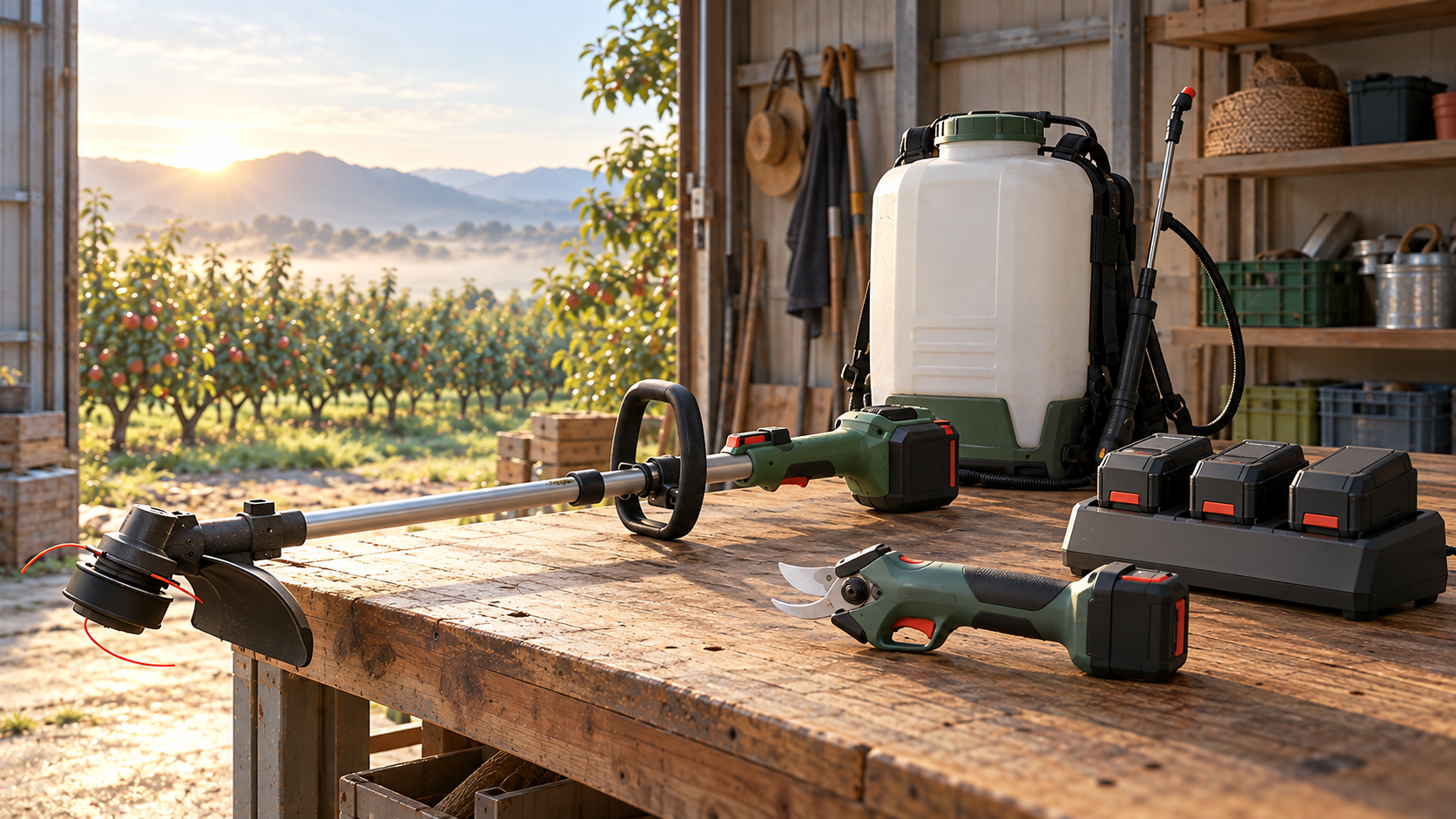
What to check when switching to cordless farm tools: battery voltage, capacity and compatibility, sprayer tank size and weight, trimmer line, Korean trimmer injury data and protective gear, and pesticide spraying protection.
Engine trimmers mean mixed fuel, pull starts, noise and fumes, so many growers now look at cordless sprayers and trimmers. Buy them one at a time, though, and your shed fills with chargers and batteries from different brands. With cordless tools, choose the battery first.
Bottom line: standardise on one battery platform. Same brand, same voltage lets your sprayer, trimmer and pruner share batteries and chargers. Choose a sprayer by the weight you can carry, and buy trimmer protection before the trimmer: Korea’s Consumer Agency logged 405 trimmer injuries in 2019–2023, 66% to feet and legs.
1. Why cordless.
No fuel mixing, push-button start, quiet, no exhaust: ideal for greenhouses and plots near home. The trade-off is runtime; large areas need several batteries.
2. Pick the battery first.
Batteries rarely work across brands. 18V and “20V MAX” are usually the same class; 36V/40V tools have more power for trimmers and large sprayers. Higher Ah lasts longer but weighs and costs more. Check the price of a spare battery and whether you can charge one while working. If you already own power tools, see whether that brand makes farm tools. Pruner buying criteria: electric pruning shears.
3. Sprayers: think weight.
A litre of water weighs 1 kg, so a full 20 L backpack tank is 20 kg plus the unit. Match tank size (16 L vs 20 L) to your daily area and strength, check how many tanks a battery covers, choose lance length for orchard or greenhouse, and make sure nozzles, hoses and pumps are easy to buy.
4. Trimmers: protection first.
Of 405 trimmer injuries (2019–2023), September had 143 and August 102; feet and legs took 66%, hands and arms 25%, head and face 5%, and about eight in ten were cuts. Line heads are safer on stony ground; metal blades handle tough growth but throw debris. Wear a face shield, safety glasses, knee pads, safety boots and gloves, keep people 15 m away, and remove the battery before clearing the head. Quiet tools make it easier to miss someone approaching.
5. Spraying pesticides.
Korea’s Rural Development Administration advises full-body protective clothing or waterproof rainwear, a tightly sealing mask, goggles, rubber gloves worn over the sleeves and taped, and tall boots; wash afterwards and launder protective clothing separately. A respirator with organic-vapour cartridges greatly reduces inhalation of spray; replace cartridges on schedule.
References
- Korea Consumer Agency trimmer injury data (2019–2023), Etoday, August 29, 2024.
- Ministry of the Interior and Safety, trimmer safety rules.
- RDA Pesticide Safety Information System, protective equipment guidance.
- Runtime and performance vary with battery, vegetation, spray pressure and temperature.