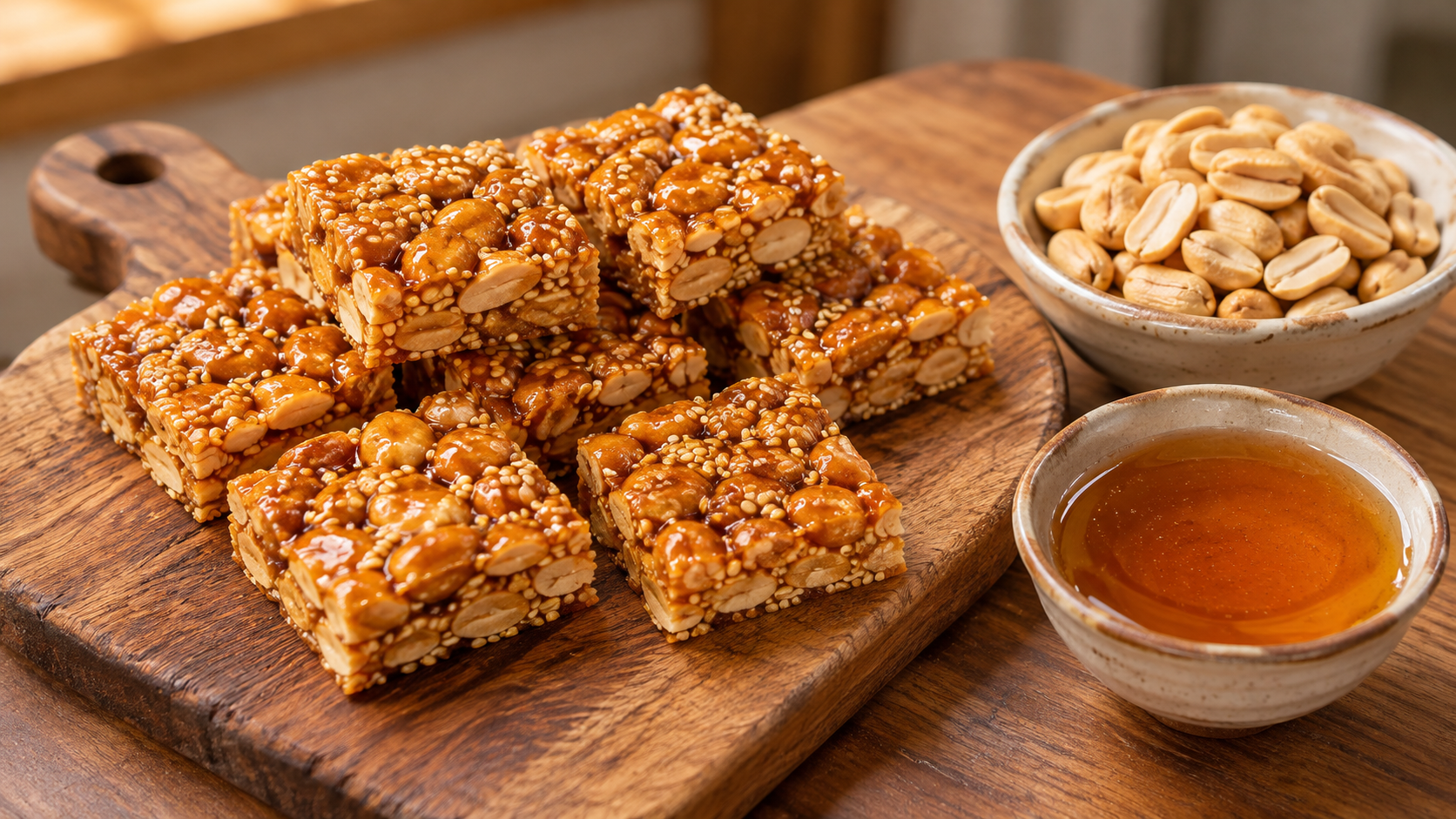
How to make Korean peanut, sesame and perilla gangjeong at home: the 120g seeds : 40g sugar syrup : 50g grain syrup ratio from a 1993 standardization study, the 20–30cm thread test, rolling to 3mm and cutting before it hardens, storage, and November 6, 2026 KAMIS prices for domestic peanuts, sesame and perilla seed.
Gangjeong fails in one of two ways: the syrup is undercooked and stays sticky, or overcooked and shatters under the knife. Both are timing problems.
Bottom line: a 1993 Korean standardization study found the best mix was 120g roasted sesame, 40g sugar syrup and 50g grain syrup (jocheong). For 300g of seeds or peanuts, use about 100g syrup and 125g jocheong. Add the seeds when syrup falling from a wooden spatula pulls a 20–30cm thread, roll it out, and cut while still warm. On November 6, 2026, Seoul wholesale prices (KAMIS) were about KRW 16,200/kg for domestic peanuts, 25,770 for domestic sesame and 16,260 for domestic perilla seed.
Earlier records: Roasted Peanuts 2026, Roasted Sesame Price 2026, Peanut Jorim 2026. Daily prices: peanut, sesame, perilla seed.
1. Ingredient cost
KAMIS wholesale, Seoul, November 6, 2026: domestic peanuts KRW 486,000 per 30kg (about 16,200/kg, 4,860 per 300g); domestic white sesame 773,000 per 30kg (about 25,770/kg); domestic perilla seed 374,000 per 23kg (about 16,260/kg). Peanuts are 6.5% cheaper than a year earlier (520,000); perilla is 10% higher (340,000). Chinese sesame (medium grade) was 217,000 per 30kg, under a third of the domestic price, so origin drives the cost of a batch.
2. The ratio
The Korean Journal of Food and Cookery Science (1993) tested white-sesame yeot-gangjeong: 120g sesame, 40g sugar syrup and 50g grain syrup scored best on taste; jocheong alone scored best on hardness. Cooking was 105°C for 4 minutes. The Encyclopedia of Korean Culture notes that jocheong with sugar dissolved in it is now common, and that peanuts are split in half before mixing.
3. Syrup stage, rolling and cutting
From the Gimje local culture encyclopedia: boil syrup, sugar and a little oil on high heat until it foams, lower to medium, and add roasted seeds when the syrup pulls a 20–30cm thread. Spread between plastic sheets, roll to about 3mm before it sets, cut 3cm strips, then cut diagonally into diamonds. Seogwipo Agricultural Technology Center gives the same rule: cut before it turns hard. Peanut gangjeong needs to be as thick as a half peanut; mixing sesame in fills the gaps.
4. Storage
Nongsaro (RDA, 2014) puts the usual shelf life of commercial hangwa at under three months and notes that lidded airtight containers slow rancidity. Homemade gangjeong has no preservatives, so keep it shorter. Pack it only after it is fully cool, separate layers with parchment, and eat perilla gangjeong first because of its higher oil content.
5. For farmers
Nongsaro describes yeot-gangjeong as a fixture of Lunar New Year food gifts. Before the holiday (February 2027), demand appears for 300g–1kg bags of domestic peanuts and sesame rather than 30kg sacks. Labeling a bag as “one batch of gangjeong” makes the use clear. Selling roasted product may require food processing registration; check with the local office first. Compare wholesale and direct-sale returns with the produce market calculator.
References
- KAMIS wholesale prices, domestic peanut, sesame and perilla seed (November 6, 2026 and November 6, 2025)
- Korean J. Food & Cookery Sci. 9(2), standardization of white-sesame yeot-gangjeong (1993)
- Digital Gimje Culture Encyclopedia, perilla yeot-gangjeong
- Seogwipo Agricultural Technology Center, three-color sesame gangjeong recipe
- Encyclopedia of Korean Culture, yeot-gangjeong
- RDA Nongsaro, hangwa article (September 3, 2014)