Korean Rural Development Administration guidance on when to dig peanuts (100–110 days after flowering, 80 days for fresh peanuts), how to check pod maturity and dry to 8% moisture, plus 10-year price patterns and October 2026 KAMIS prices for timing sales.
Peanut pods ripen underground, which makes it hard to judge when to dig. Dig too early and the kernels are underfilled; too late and pods sprout or break off in the soil. Poor drying invites mold. And once dug, timing the sale changes what you receive.
Bottom line: Korea’s Rural Development Administration puts the harvest window for seed peanuts at 100–110 days after flowering, late September to early October. Peanuts for boiling fresh are dug about 80 days after flowering, in early September. Dry pods fully to about 8% moisture and store them in the shell. On 10-year averages, wholesale prices peak in October and drop 6% in November as the new crop arrives. On October 2, 2026, top-grade domestic peanuts sold for KRW 486,000 per 30 kg in Seoul.
1. When to dig.
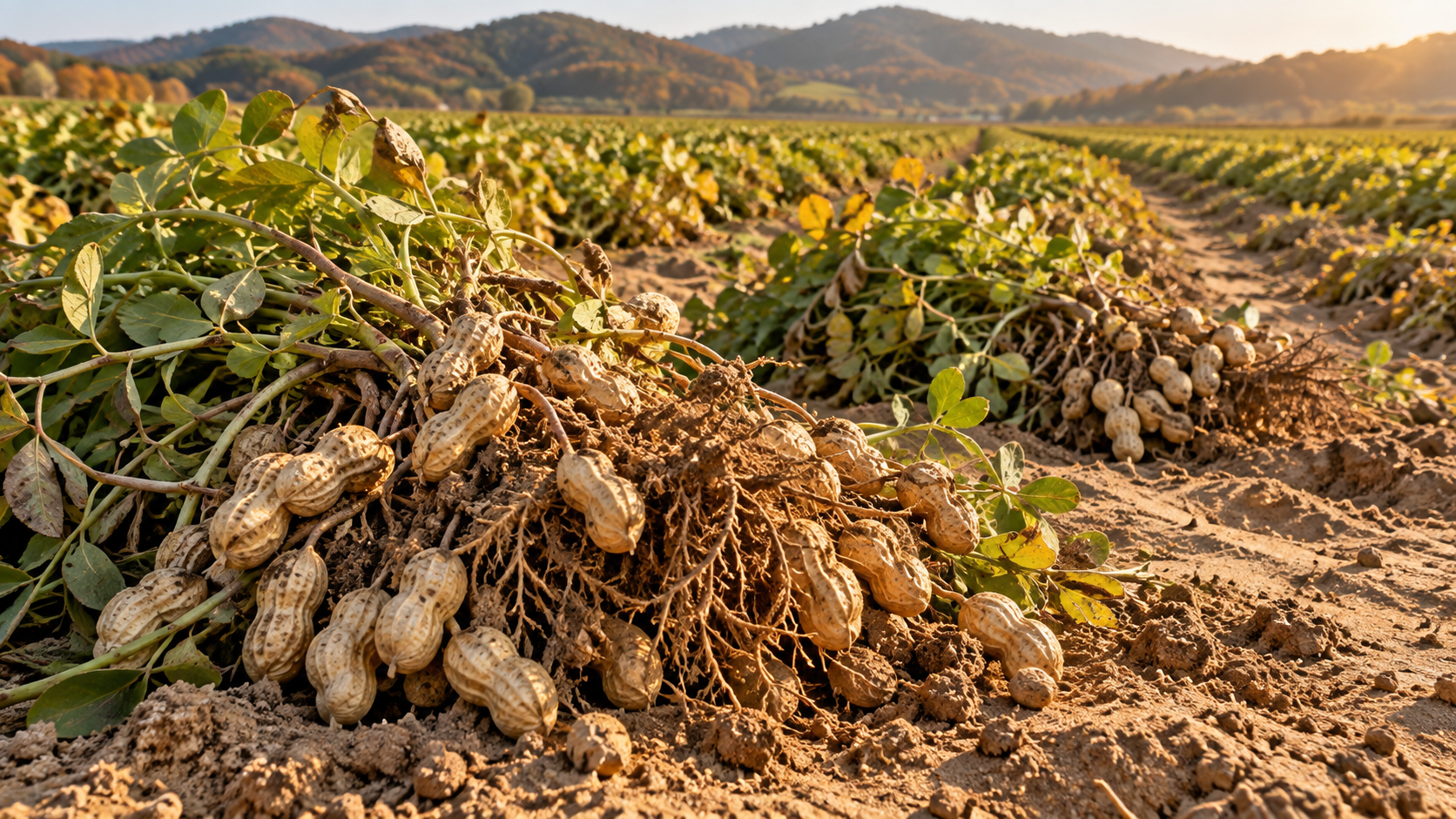
Count days from flowering, not sowing. Before the main harvest, dig a few test plants: well-matured pods have a clear net-like vein pattern and a thick, hard shell; soft shells with faint veins are not ready. Dig when most pods are mature, since waiting for every pod lets the earliest ones spoil.
2. Drying and storage.
Plants are often turned over and field-dried before picking pods, then pods are sun-dried on nets rather than bare soil. Dry to about 8% moisture and store in the shell somewhere cool and dry. Bring nets in before rain.
3. When to sell.
Ten-year Seoul averages (2016–2025) rise slowly from January (KRW 372,545) to October (KRW 406,833), then fall 6% in November (KRW 382,512). Holding until spring was a coin toss: March beat October in only 4 of 9 years, with swings from −23% to +26%.
4. This year.
Seoul has held at KRW 486,000 since September 1, 10% below a year earlier but 19% above the 10-year October average. Daegu paid KRW 540,000 and Daejeon KRW 450,000, a 20% gap. These are wholesale intermediary prices; growers receive less at auction.
5. Conclusion.
Judge the harvest by the pods, using 100–110 days after flowering as the guide, dry to 8% moisture, and sell what you can in October before new-crop supply pushes November prices down.
Sources
- Rural Development Administration, Nongsaro peanut cultivation guidance (harvest timing, pod maturity, drying and storage).
- aT KAMIS, period wholesale (intermediary) prices and monthly averages: domestic peanuts, top grade, 30 kg, 2016–October 2, 2026 (Public Data Portal API).
- Actual harvest timing and prices vary by variety, sowing date, weather, market and terms of sale.