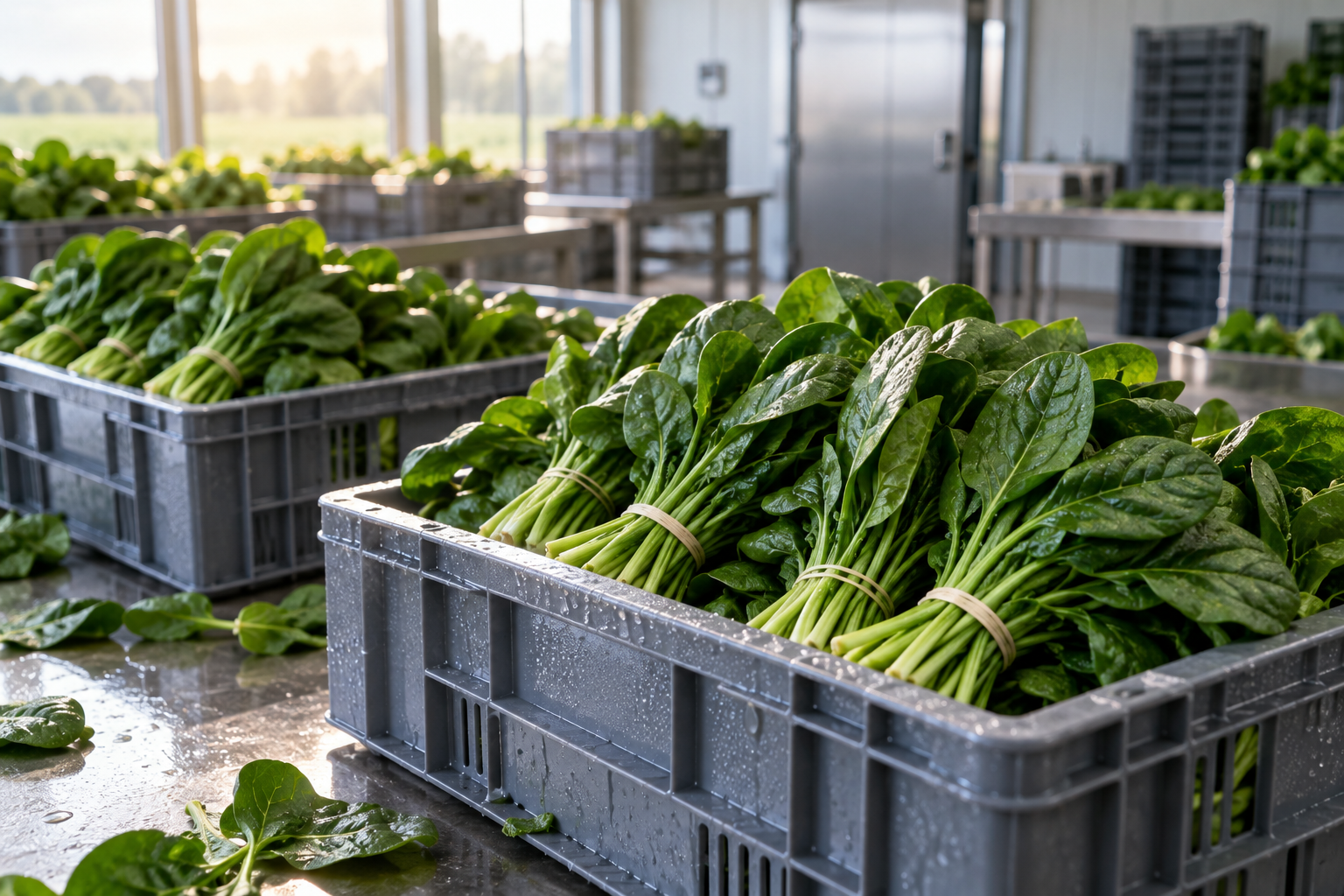
A practical farm guide to late-September spinach prices, weather risk, shipment timing, grading, and storage limits.
Spinach can change mood in a day. Yesterday the market looked strong. Today, one wave of supply can push prices down. That is the nature of leafy vegetables. Spinach does not wait patiently in storage.
Bottom line: late-September spinach prices move with temperature, rain, supply recovery, and quality spread. Ship good lots quickly and avoid holding weak leaves too long.
1. Weather is the first reason prices swing.
Spinach is sensitive to heat and rain. High temperatures hurt growth and make quality uneven. Rain can soften leaves and slow field work. When temperatures cool, supply can recover and pressure prices.
That is why a late-September spinach quote needs context. Prices may fall from the previous week while still being high versus a normal year. Premium lots may hold value while mid-grade lots weaken quickly.
KAMIS wholesale data separates spinach by grade and uses a 4 kg unit. It also compares daily, weekly, monthly, yearly, and normal-year price levels. That structure shows how fast this crop moves.
2. Rotation matters more than storage.
Spinach is not a crop for waiting for a large rebound. Even with cold storage, weak leaves can lose value quickly. If field heat remains after harvest, box quality can drop before the price improves.
A practical order is simple.
- Cool harvested spinach quickly.
- Separate clean premium leaves first.
- Do not hold mid-grade lots too long.
- Split wholesale, local food, and food-service channels.
- Speed up shipment before rain.
Spinach is different from perilla seed or sesame seed. The leaf talks first.
3. Where to check the price.
Use /prices/spinach/ on IMUN.FARM for a consistent daily comparison page. Then confirm actual selling conditions through KAMIS or your local market. Transaction prices vary by market, grade, box condition, and buyer.
KAMIS also lists spinach under vegetables with 4 kg units and separate premium and mid-grade rows. That grade split matters in real selling. Premium lots can hold value. Mid-grade lots can be discounted quickly when supply rises.
4. Sell now or wait one more day.
Sell now when:
- leaf tips are weak;
- field heat remains after harvest;
- rain is forecast;
- market arrivals are increasing;
- the lot is mostly mid-grade.
In this case, waiting is close to gambling. Grade fast and do not mix weak leaves with better boxes.
Waiting one day can work when:
- cooling is good;
- leaves are thick and clean;
- orders are already lined up;
- local-food or food-service prices are stable;
- tomorrow’s arrivals may be lighter.
Even then, waiting means a day-scale decision, not a long storage strategy.
5. Mistakes to avoid.
Do not read only the average price. Check premium and mid-grade separately.
Do not compare only with last year. This year’s weather and regional supply can change the meaning of that comparison.
Do not turn a 4 kg box price directly into field profit. Harvest rate, loss rate, packaging, and freight still matter.
When spinach prices are high, complaints are expensive too. Shipping weak leaves can damage the next deal.
Farm checklist.
- Cool boxes quickly after harvest.
- Do not mix premium and mid-grade leaves.
- Ship faster before rain.
- Separate local-food packs from wholesale boxes.
- Be conservative about return risk when prices are high.
- Compare
/prices/spinach/with KAMIS before pricing.
References
- aT KAMIS agricultural price OpenAPI, vegetable spinach 4 kg wholesale query structure.
- IMUN.FARM
/prices/spinach/price page. - Actual prices can vary by region, arrival volume, grade, packing condition, and buyer.