As of the October 1, 2026 KAMIS survey: green, Cheongyang, cucumber-type and shishito pepper wholesale prices, the post-Chuseok drop, and how to handle the last harvest before frost.
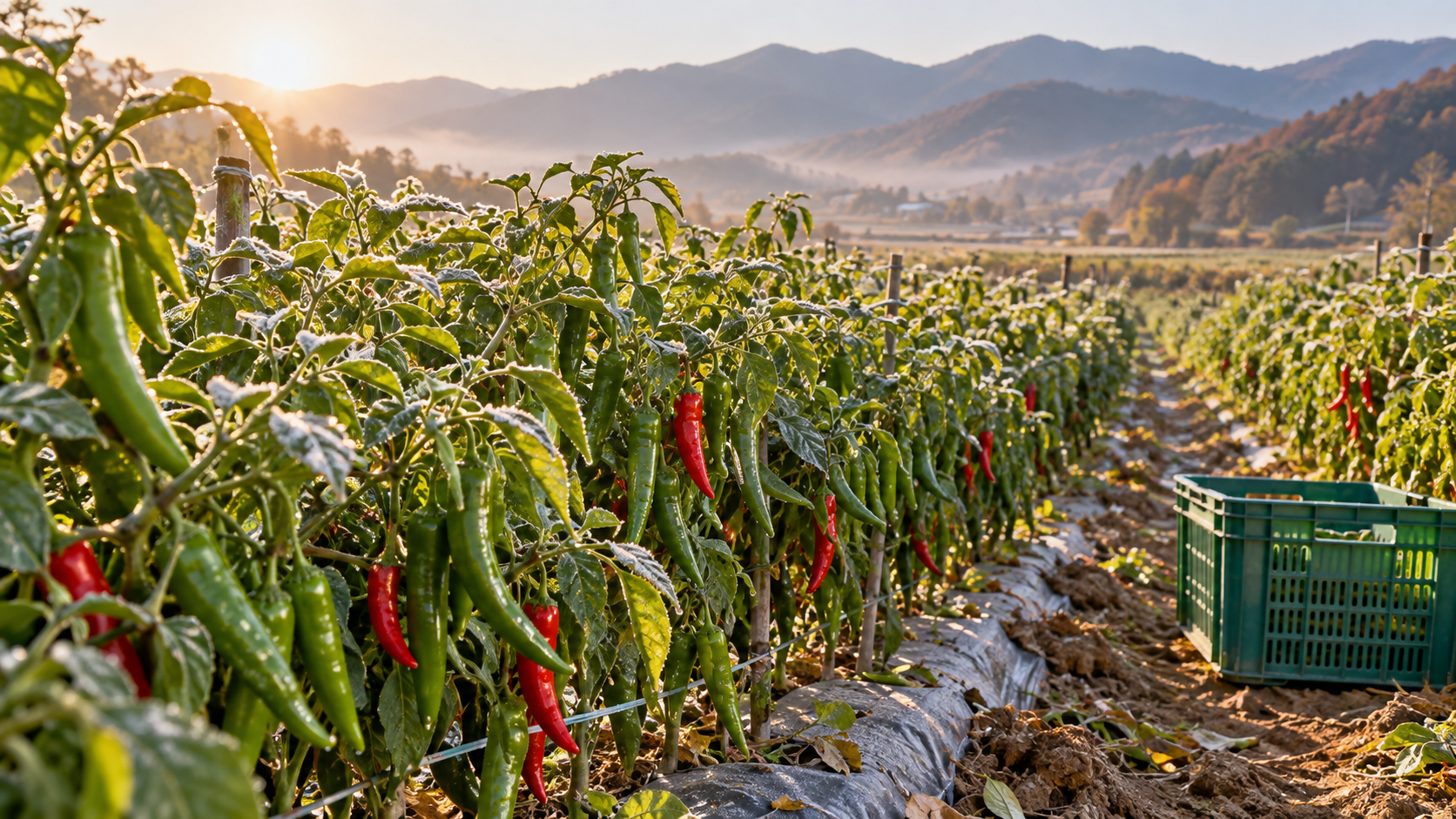
In October, Korean pepper fields are still full of green peppers that will never turn red. They have to be picked and sold before the first frost, and this year the price board is disappointing. Green peppers that topped KRW 140,000 per 10 kg a year ago are now in the 60,000s. Look a little further back, though, and this year is less “unusually cheap” than last year was “unusually expensive”.
Bottom line: as of the October 1, 2026 KAMIS survey, top-grade green peppers (Nokgwang type) sold for KRW 60,700 per 10 kg in Seoul. That is 43% of the KRW 142,000 seen a year earlier and 31% below KRW 87,500 just before Chuseok on September 23. It is close to the 2016–2025 Seoul October average of KRW 65,744.
Try it yourself: the produce market sales calculator compares what you keep in Seoul, Busan, Daegu, Gwangju and Daejeon at today’s prices.
1. Where prices stand.
| Variety (top grade) | October 1 | September 23 | One year earlier | vs a year ago |
|---|---|---|---|---|
| Green pepper, 10 kg | 60,700 | 87,500 | 142,000 | down 57.3% |
| Cheongyang, 10 kg | 53,500 | 52,000 | 55,000 | down 2.7% |
| Cucumber-type, 10 kg | 58,700 | 74,700 | 74,700 | down 21.4% |
| Kkwari (shishito), 4 kg | 23,700 | 43,700 | 43,600 | down 45.6% |
All prices are in KRW for Seoul. Daily data: green pepper, Cheongyang, cucumber-type, kkwari.
2. Why it is half of last year.
| Year | October average |
|---|---|
| 2016 | 43,450 |
| 2018 | 41,286 |
| 2020 | 61,821 |
| 2022 | 67,263 |
| 2023 | 94,326 |
| 2024 | 101,640 |
| 2025 | 98,733 |
| 2026 | 60,700 |
From 2016 to 2022, October averages ranged from the 30,000s to the 60,000s. Then three straight years landed around KRW 94,000–102,000, and October 1–2, 2025 spiked to KRW 142,000–153,000. Against that, this year looks like half price. Against the ten-year average it is only about 8% lower. Growers should plan around the ten-year level, not the last three years.
3. A 31% drop in a week after Chuseok.
Seoul prices rose from KRW 62,000 on September 1 to 93,200 on September 17 and held 87,500 into the holiday (September 24–26). After the break they fell to 84,700, then 75,000, then 60,700 on October 1, a 19% drop in a single day.
Arrivals explain it. Compared with a week earlier, Seoul’s Garak and Gangseo markets received 48% more green peppers (1,267 kg vs 856 kg), 32% more cucumber-type, 19% more Cheongyang and 23% more kkwari on October 1. Holiday demand had ended just as supply surged. Busan and Daegu fell the same way.
4. Why Cheongyang is holding.
KREI’s September outlook expected Cheongyang-type shipments to be 6.1% lower than last year, citing early-August heat and weak sunshine in Gangwon, which supplies about 85% of September volume, and slow, leggy growth in the Honam region. It forecast September Garak prices around KRW 49,000 per 10 kg, above last year’s 39,000. KAMIS Seoul averaged KRW 53,960 in September, and October shipping area is 0.2% lower. Growers with both types should prioritize Cheongyang shipments this month.
5. Late green peppers are a race against frost.
Frost turns leaves and fruit soft and dark, so for late-season field peppers, weather sets the schedule before price does. First frost varies by year and region; Gangwon’s mountain areas often see it in early to mid October and inland central regions toward late October. When forecast lows fall below about 3–4°C, be ready to pick everything.
- Frost forecast within 3–4 days: pick all at once and ship in portions.
- Frost still far off: pick only full-size fruit and let the rest size up.
- Arrivals still rising week on week: grade strictly; low grades fall first.
- Direct or pickling orders available: send small peppers there.
- Store at 7–10°C and 90–95% humidity. Below 7°C, peppers suffer chilling injury. See our cold storage table.
6. The rest of October.
Post-holiday drops usually stop once the backlog clears, but there is little to push prices back to September levels while greenhouse and field supplies overlap. Expect prices to move around current levels, with the ten-year October average in the mid-60,000s as a reference. An early frost that cuts field supply could lift prices; a long warm spell could push them lower.
7. Conclusion.
As of the October 1, 2026 KAMIS survey, Seoul green peppers sold for KRW 60,700 per 10 kg, less than half of last year but close to the ten-year norm. Rising arrivals after Chuseok drove the drop, and the timing of the first frost will shape the rest of October. Picking and grading before frost, and sending small fruit to direct sales, will do more for growers than waiting for last year’s prices.
References
- aT KAMIS, wholesale intermediary prices: green pepper (Nokgwang type), Cheongyang and cucumber-type 10 kg, kkwari 4 kg, top grade, as of October 1, 2026 (data.go.kr API).
- aT KAMIS, monthly wholesale averages, green pepper, Seoul, 2015–2026.
- data.go.kr, aT shipment volume data: pepper arrivals at Seoul Garak and Gangseo wholesale markets, September 23 to October 1, 2026.
- Korea Rural Economic Institute, Agricultural Outlook: Fruit Vegetables, September 2026 issue (September 2, 2026).
- USDA Agricultural Handbook 66, The Commercial Storage of Fruits, Vegetables, and Florist and Nursery Stocks.
- IMUN.FARM
/prices/green-chili-pepper-4/price page. - Actual prices vary by variety, size, shape, buyer and terms.